
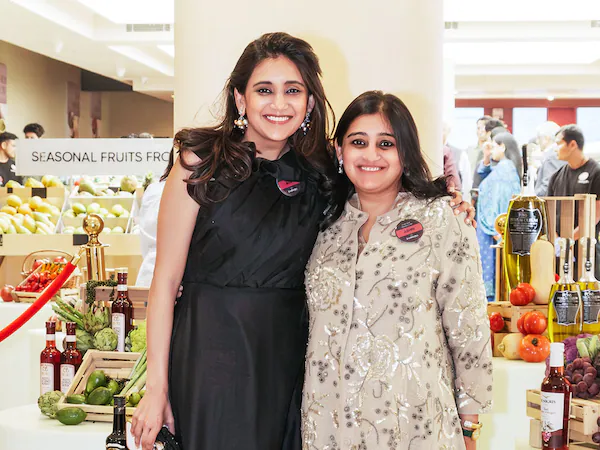
Ashni and Avni Biyani Foodstories founders, open up about reinventing gourmet retail, building on Foodhall’s legacy, and why water is now their fastest-growing category.
Ashni and Avni Biyani Foodstories
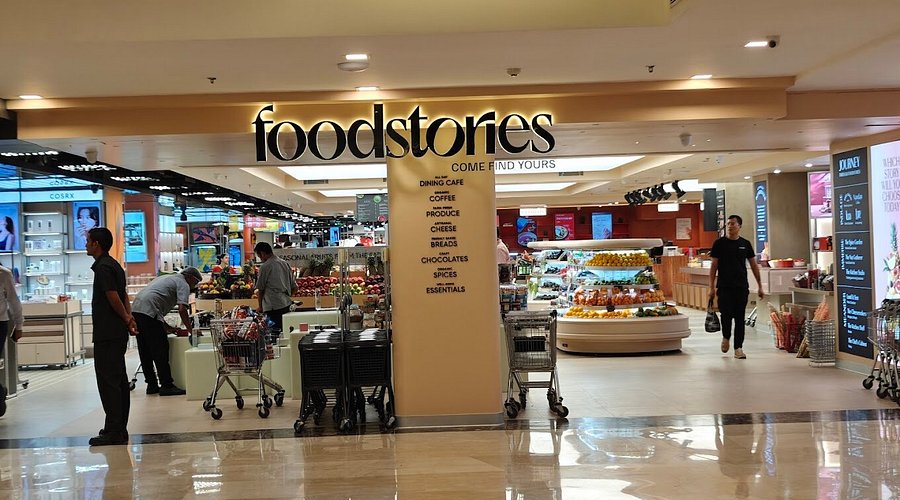
Walk into the newest Foodstories outlet in Bandra, Mumbai, and you’ll spot giant Andhra Pradesh mangoes sitting just steps from imported American candy under warm, glowing lights. Founded by sisters Ashni and Avni Biyani, the gourmet grocery brand has bigger ambitions than just running an upscale store; it wants to become India’s answer to Erewhon. The Bandra launch marks Foodstories’ fourth outlet, following Bengaluru, Delhi, and Hyderabad, and this store goes further still with a cafe, a beverage bar serving inventive drinks like a coconut cloud espresso topped with parmesan foam, and an in-house bakery.
This isn’t the sisters’ first attempt at gourmet retail. As daughters of Kishore Biyani, founder of Future Group, they previously built a near-identical venture called Foodhall, launched in 2011 under the group’s umbrella. Foodhall eventually shut down in 2023 when its parent company hit financial trouble, but rather than abandoning the idea, Ashni and Avni chose to revive it on their own terms.
What’s striking is how much they say the customer has changed since 2011. Shopping habits have shifted, expectations have risen, and the gourmet retail space has grown far more crowded. One standout insight from the founders: water has become their fastest-growing category, a small but telling sign of how priorities around health and premium everyday products have evolved.
For the Biyani sisters, Foodstories isn’t a nostalgic redo of Foodhall; it’s a reimagined bet built on hard-won lessons, betting that they understand today’s customer better the second time around.
In a recent interview, Ashni and Avni Biyani of Foodstories were asked why Mumbai, despite being such a major market, came so late in their four-store rollout. Avni explained that launching a store of this scale demands the right convergence of property, location and timing, and that they were always certain Bandra would be their entry point into the city, calling it the cultural heart not just of Mumbai but arguably of the whole country.
She added that watching Mumbai’s food scene mature over the past couple of years actually worked in their favor, since it meant they were stepping in with a far deeper understanding of the new Indian consumer. That waiting period, she said, also gave them space to stress-test their business assumptions and refine their thinking, something that’s now reflected across every Foodstories location.
When asked to describe how today’s customer differs from the one they served back when Foodhall first launched, Ashni offered an interesting take. She noted that food awareness has grown dramatically, and that discovery now fuels more discovery, people increasingly use food as a form of self-expression, wearing dietary identities like badges, whether vegan, gluten-free or otherwise. She also pointed out a deeper shift: customers now encounter brands online before ever stepping into a store, which has its own logic and demands its own strategy.
Still, she believes the constant through all of this has been storytelling, since people keep returning to brands for the narrative as much as the product, a philosophy that Ashni and Avni Biyani Foodstories has built its identity around.
On the topic of shifting consumption habits, Avni reflected that customers today scrutinize everything that goes into their bodies, down to the type of flour or oil they’re using, driven by a much sharper awareness of health and long-term wellbeing. She contrasted this with the original Foodhall era, when the appeal was largely about novelty, people experimenting with Thai or Japanese cooking for the first time at home. Now that experimentation feels routine, she explained, and customers have layered a new expectation on top of it: even indulgence has to come from quality ingredients.
Asked which categories were growing fastest, Ashni revealed something unexpected, water. She described how packaged water has become such a serious purchasing decision that Foodstories built an entire “water library,” letting shoppers choose bottles based on TDS levels, mineral content and source, guided by an in-house water sommelier. She linked this to growing anxiety in India around water adulteration, especially among parents choosing water for their children. That same health-conscious mindset, she added, is fueling demand for raw honey, alternative sugars, and is starting to reshape how people think about flour, much like the shift consumers once had around milk choices. Hot sauces, interestingly, are riding a similar wave of growth.
When the conversation turned to protein, Avni was careful not to overstate its importance relative to other nutritional priorities. She said protein sits alongside fibre and superfoods in their curation philosophy, and that they’ve also built out offerings around women’s health using ingredients like shatavari, ashwagandha and moringa. Her broader philosophy, she explained, is that the customer should always lead, with the brand simply curating choices rather than dictating what people ought to buy.
Asked how a physical retail brand competes in an era dominated by quick commerce, Avni acknowledged that Ashni and Avni Biyani Foodstories does offer 60 to 90 minute delivery through its own app, but stressed that convenience alone isn’t enough to draw people out of their homes anymore. She believes today’s shoppers are craving genuine experiences, pointing to India’s booming concert culture as evidence of this appetite, and said that’s exactly why Foodstories invests in tasting booths, live demonstration stations, weekend workshops and even a flour-mixing corner.
Ashni jumped in with a memorable example: a ticketed “grocery rave” hosted at their Bengaluru store, complete with a live DJ and non-alcoholic drinks, an idea many doubted would work. People showed up and danced anyway.
Finally, when asked what lessons they’ve carried forward from the Foodhall era into building Foodstories, Ashni reflected that every business era demands its own playbook, and that today’s ventures require far more nuance and depth than before, something she says excites her about this new chapter for Ashni and Avni Biyani Foodstories.
She admitted they don’t claim to have everything figured out, since the customer keeps evolving and forces them to stay adaptable rather than locking into rigid, long-term systems. Avni echoed that sentiment, admitting that what frightens her most isn’t competition, it’s complacency, because losing touch with the customer means losing the business entirely. She spoke about the sisters’ competitive streak, how seeing other entrepreneurs succeed pushes them to ask themselves whether they could be doing something even more meaningful. That restless, ever-curious energy, she said, is ultimately the greatest strength behind Ashni and Avni Biyani Foodstories, as founders who see themselves as lifelong learners.
“True entrepreneurship isn’t about getting it right the first time, it’s about having the courage to rebuild, the wisdom to listen to your customer, and the restless energy to keep asking, ‘Can’t we do something better?'”
Also Read: Graphiedit: The Rising Powerhouse of 3D, VFX, & Motion Graphics