

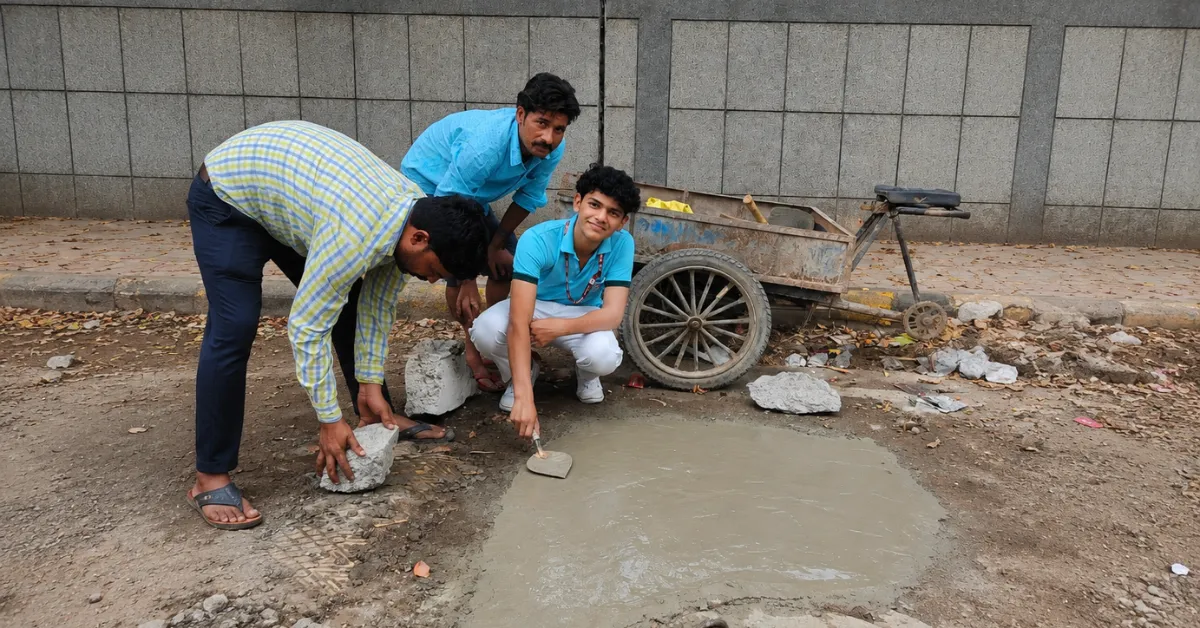
Parth Project Sadak Delhi teenager built an AI platform to fix potholes after his parents met with a motorcycle accident, proving one determined student can fix what broken government systems could not.
Parth Project Sadak Delhi: When a Personal Tragedy Became a National Mission
Most teenagers respond to frustration by venting and moving on. Parth, a 15-year-old student from Delhi, responded by building a platform that is actually fixing roads. The story behind Parth Project Sadak Delhi begins not with a grand vision or a school assignment, but with a frightening phone call and a motorcycle accident that could have ended far worse than it did.
Parth’s parents had travelled to Agra to celebrate his grandfather’s anniversary, spending the day surrounded by family and warmth. But on their way back that evening, riding through the darkness, they struck an unfinished construction site jutting out from the road. His father lost control, and they fell. Thankfully, the injuries were not life-threatening, but the incident shook Parth deeply. Rather than letting that fear settle into resignation, the way most of us do after a near-miss, he let it become fuel.
“It wasn’t a major accident, but it did awaken a calling inside me that I really needed to do something about this,” he recalled.
That calling would eventually become Project Sadak, and the Parth Project Sadak Delhi story would go on to prove something that most adults with far more resources have failed to demonstrate: that India’s pothole crisis is not unsolvable. It just needed someone stubborn enough to refuse to accept it.
A Problem Bigger Than One Family’s Close Call
Once Parth began looking into India’s pothole problem seriously, turning back became impossible. The numbers were staggering. Approximately 20,000 people die every year in India from pothole-related accidents. These weren’t abstract figures. They represented real families, real loss and real infrastructure failure that an entire system had quietly learned to accept as inevitable.
He did what any concerned citizen might do first: he tried the official channels. The Municipal Corporation of Delhi has an app specifically for reporting potholes. Parth downloaded it, filed reports and waited. And waited. And waited.
“It takes a lot of time. In many cases, it takes three to four months before you get a reply,” he discovered. “By the time authorities respond, the monsoon may have made it worse, or more accidents may already have occurred.”
This gap between what existed and what was needed is what gave birth to the Parth Project Sadak Delhi initiative. Government systems were not failing because the technology wasn’t available. They were failing because urgency was absent, accountability was broken and follow-through simply didn’t happen consistently enough to matter.
Building Something From Nothing
In January 2026, Parth sat down at his computer and started writing code, alone, line by line, teaching himself what he didn’t already know. By mid-February, the platform was ready to launch. The Parth Project Sadak Delhi build was entirely self-taught, with AI assistance introduced only as the technical complexity grew beyond what he could manage solo.
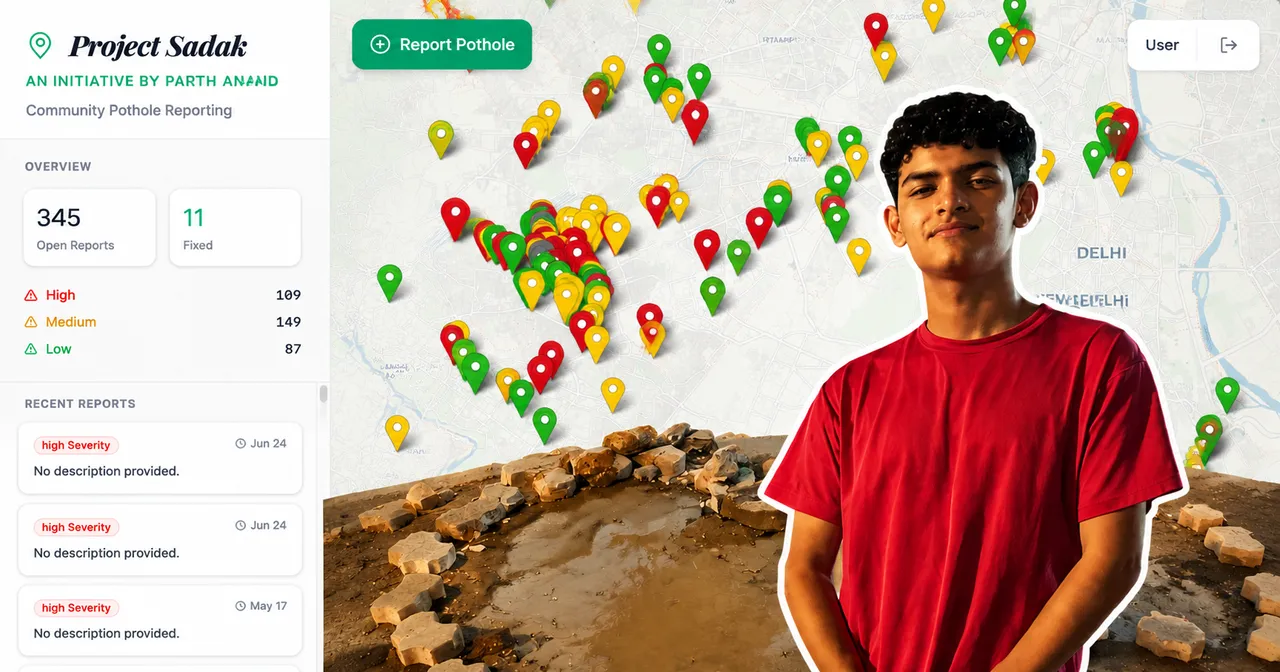
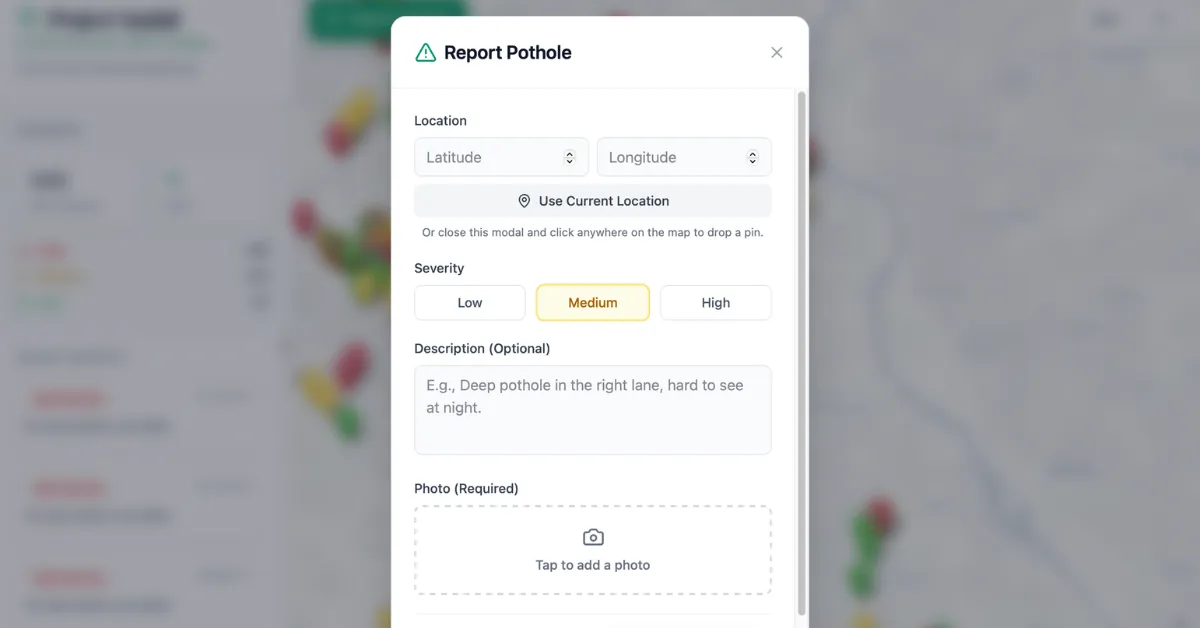
The platform he created combines artificial intelligence, citizen reporting and direct government outreach in ways that existing, better-funded systems had somehow never managed to put together effectively. The core innovation is elegant in its simplicity. When a citizen submits a pothole report, they upload a photograph. An AI system immediately analyses the image to verify that it genuinely shows a pothole, filtering out spam and mistaken submissions before they clog the system. If the AI confirms it, the report goes live instantly. If the algorithm is uncertain, it flags the submission for human review.
Users also classify potholes by severity: high, medium or low. But Parth and his small team review every single classification and override it when necessary, ensuring that truly dangerous potholes are prioritised appropriately and don’t get buried under a flood of minor complaints. This human layer of oversight is what separates Parth Project Sadak Delhi from most crowdsourced platforms, where self-reporting alone tends to produce inconsistent and unreliable data.
A Lean Team Doing the Work of an Organisation
While Parth handles all the technical development and overall management himself, he has built a compact team of fellow students around him. One friend manages quality control, serving as the human checkpoint for every report. Another scouts for grant opportunities, keeping the platform funded without compromising its independence. Three people in total, all students, running what would typically require a full organisation with dedicated staff.
The numbers tell a story of genuine traction. The platform currently carries 307 unique open reports, attracts between 250 and 500 daily visitors and has expanded its geographic reach to cover Delhi, Bengaluru, Gurugram and other parts of Haryana. But the most meaningful metric isn’t traffic or report volume. It’s what happens after someone hits the submit button.
Once a report clears AI and human review, the Parth Project Sadak Delhi platform generates a detailed email and sends it directly to the relevant authority, whether that’s the Municipal Corporation of Delhi or the Development Department, depending on jurisdiction. This process, which Parth initially did manually, is now fully automated. The platform creates a paper trail for every report, making it significantly harder for authorities to simply ignore problems through inaction.
When Official Channels Aren’t Enough
Parth quickly learned something that every civic activist eventually discovers: official channels alone are rarely sufficient. Of the 11 potholes fixed through Project Sadak so far, he personally managed the repair of 10 in Delhi himself. Using grant money, he hired two to three local workers, purchased materials and showed up at each site to oversee the work.
“I would reach there myself to repair them, and I have pictures with almost all of the potholes,” he said, documenting every fix the same way the platform documents every report.
The eleventh repair came through something Parth describes as magic, though viral attention is perhaps more accurate. In Bengaluru, a reported pothole was fixed even without clear contact with local authorities, after entrepreneur Mukund Jha reposted content about the platform and suddenly brought a wave of new visibility and reports from the city. Sometimes change moves through official channels. Sometimes it moves through public pressure. And sometimes it moves through a combination nobody can quite predict or explain.
The Road Ahead
The ambitions behind Parth Project Sadak Delhi extend far beyond Delhi’s roads. Parth is planning a WhatsApp bot integration that would let citizens report potholes through an app they already use dozens of times daily, removing the friction of downloading anything new. Enhanced AI features are in development to generate and send authority notifications with zero human intervention. He is also in active discussions with the Delhi Development Authority about a potential pilot programme that would integrate Project Sadak’s data directly into government infrastructure systems.
His longer-term vision stretches further still: expanding to other Indian states, then to Asian and African countries, the regions he identifies as most severely affected by pothole-related deaths.
He is simultaneously preparing to present a research paper on AI bias at the Society for Study of Artificial Intelligence in the UK this July, while managing Class 11 coursework covering physics, chemistry, mathematics and computer science. The Parth Project Sadak Delhi story is, among other things, a lesson in what focused determination looks like when it isn’t waiting for permission, resources or the right moment to arrive.
What One Teenager Proved Possible
Project Sadak is not just filling holes in roads. It is filling holes in accountability, creating transparency that makes it harder for infrastructure failures to be quietly ignored and easier for citizens to demand the standards their taxes are supposed to guarantee.
In a country where cynicism about civic systems often feels like the only rational response, the Parth Project Sadak Delhi journey stands as quiet but powerful proof that change doesn’t require a government position, corporate backing or decades of experience. Sometimes it requires nothing more than a 15-year-old who refused to accept that frustration was the only possible response, and who was willing to write the first line of code when nobody else did.
The potholes are still there, far too many of them. But now there is a platform that actually does something about them. And that, as Parth has shown, makes all the difference.
Also Read; Mihika’s Self-Defense Mission: Massive Empowerment of girls