
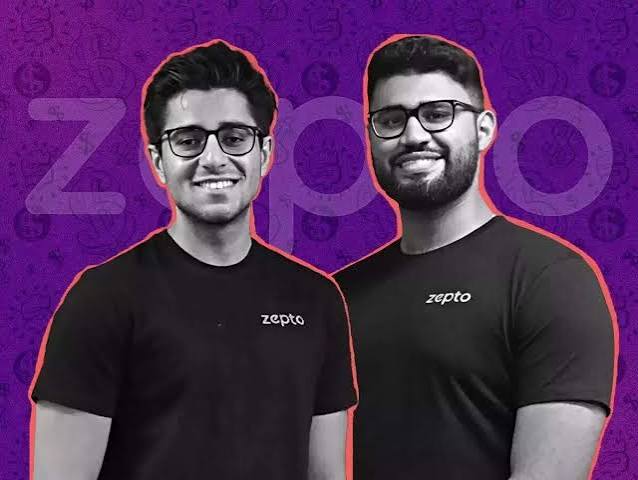
Aadit Palicha and Kaivalya Vohra Zepto founders built a 7-billion-dollar quick commerce giant before turning 25, starting from a WhatsApp group during COVID lockdowns and dropping out of Stanford to change how India shops.
Aadit Palicha and Kaivalya Vohra Zepto: A Startup Story That Doesn’t Feel Like One
Most startup stories begin with a big idea sketched on a napkin or debated in a college dorm. The story of Aadit Palicha and Kaivalya Vohra Zepto began with something far more ordinary: a WhatsApp group for neighbors trying to get groceries delivered during a lockdown. What came out of that group is now valued at 7 billion dollars. Its founders are not yet 25. Even knowing how it ended up, the speed of it is genuinely difficult to process, and Aadit Palicha and Kaivalya Vohra Zepto now stands as a company that changed consumer behavior in India’s biggest cities so thoroughly that “Zepto it” entered everyday vocabulary faster than most brands manage in a decade.
Who Are the Zepto Founders
Aadit Palicha and Kaivalya Vohra Zepto was co-founded by Aadit Palicha, who serves as CEO, and Kaivalya Vohra, who leads as CTO. The two were childhood friends, both got into Stanford University for computer science, both dropped out, both came back to India, and together built a quick commerce company that delivers groceries in under ten minutes, a concept that most industry veterans called unsustainable when it launched.
Kaivalya Vohra was born on March 15, 2003, in Bengaluru, though he spent much of his childhood in Dubai. At Dubai College, he was deputy head boy, captain of the under-19 basketball team and the founder of his school’s Computer Society. He wasn’t waiting to be assigned a problem. He was already building structures around the things he cared about. His parents were reportedly among the earliest believers in what he and Aadit were trying to build, which is an underrated part of the Aadit Palicha and Kaivalya Vohra Zepto story.
Aadit Palicha grew up in Mumbai with a restlessness that didn’t fit neatly into conventional paths. He launched his first venture, GoPool, a student carpool app in Dubai, at just 17 years old, well before Zepto existed. It didn’t scale. He moved on. He completed an IB Diploma in Mathematics and Computer Science before joining Stanford, and his father Kavit Dilip Palicha, an engineer, is now a stakeholder in Zepto. This wasn’t a family indifferent to what he was building.
The Problem That Started Everything
COVID-19 broke a lot of things. For most people in Mumbai during the 2020 lockdowns, grocery delivery was one of them. Getting basic essentials could take anywhere from two days to never. Aadit and Kaivalya lived this problem directly, watching neighbors scramble and apps repeatedly fail to deliver. They started a WhatsApp group to coordinate grocery runs in their building, and something clicked.
The market gap was obvious to anyone willing to look clearly at it. India had the population density, the smartphone penetration and the consumer appetite for fast delivery. What it didn’t have was a company willing to own the last mile rather than outsource it. That observation became the founding insight behind Aadit Palicha and Kaivalya Vohra Zepto, and everything that followed grew from it.
KiranaKart: The Failure That Made Zepto Possible
Their first attempt at solving this problem was called KiranaKart, a model that tried to work through local kirana stores. It was sensible on paper but impossible to control at scale. Delivery times were inconsistent, quality was unpredictable and they couldn’t optimize what they didn’t own. After roughly ten months, they shut it down.
They had also gone through Y Combinator’s accelerator programme during this period, a detail that often gets buried but matters because YC’s discipline around metrics and conviction likely shaped how they thought about the pivot that followed. The pivot was dramatic: build the warehouses themselves, stock the inventory, own the delivery window entirely.
It felt expensive and complex. It turned out to be the only thing that actually worked. This willingness to kill what wasn’t working and rebuild from scratch is perhaps the defining characteristic of Aadit Palicha and Kaivalya Vohra Zepto as founders and as a company. The name Zepto itself, derived from zeptosecond, the smallest measurable unit of time in science, captured exactly that ambition: extreme, almost absurd speed in a country where two-day delivery was still considered fast.
How the Business Actually Works
Zepto doesn’t partner with stores. It is the store. The model runs on dark stores, small strategically located micro-warehouses of roughly 2,000 to 3,000 square feet, stocked entirely for speed. No walk-in customers, no display windows, just shelves optimized for picking, packing and dispatching as fast as possible. When a customer places an order, the nearest dark store receives it instantly, a picker pulls the items within around 90 seconds, and a delivery partner completes the last mile route under two kilometres. The median delivery time sits at eight minutes and 47 seconds, faster than the ten-minute promise the brand makes.
Revenue flows from multiple directions: product sales, platform and delivery fees, Zepto Pass which is a paid membership with over four million subscribers, Zepto Café which has an annualised revenue run rate of over 110 million dollars, Zepto Atom which is a paid analytics platform for brands launched in May 2025, and advertising revenue from brands selling on the platform. The company carries over 25,000 SKUs spanning groceries, electronics, personal care and fashion. Dark store density is the core competitive lever that Aadit Palicha and Kaivalya Vohra Zepto has built its entire operational advantage around.
The Funding Journey and Valuation Growth
The Aadit Palicha and Kaivalya Vohra Zepto funding story is one of the more remarkable capital raises in recent Indian startup history.
Starting with a pre-seed round of 730,000 dollars for KiranaKart in January 2021, the company progressed through a Series A of 60 million dollars in October 2021, unicorn status in August 2023 through a Series E at 1.4 billion dollars, a Series F of 665 million dollars in June 2024 at 3.6 billion dollars, a Series G of 340 million dollars in August 2024 at 5 billion dollars, and a Series H of 450 million dollars in October 2025 at 7 billion dollars led by CalPERS, the California Public Employees Retirement System. Pension funds don’t typically lead direct startup rounds.
That one did signals a level of institutional confidence that goes well beyond typical venture backing.
Total raised stands at approximately 2.4 billion dollars. The valuation growth of roughly 12 times in three years, combined with unicorn status arriving in August 2023 ending India’s 11-month unicorn drought, tells its own story about how quickly the market came to believe in what Aadit Palicha and Kaivalya Vohra Zepto was building.
Revenue, Losses and the Path to Profitability
FY24 revenue came in at 4,454 crore, double the FY23 figure of 2,025 crore. Q4 FY26 revenue hit 7,498 crore representing 75 percent year on year growth. Net losses in FY24 stood at 1,248 crore, a marginal improvement from FY23. Roughly 50 to 60 percent of Zepto’s 650 plus dark stores are currently profitable, which indicates the direction of travel even if the full picture isn’t there yet.
The Challenges They Navigated
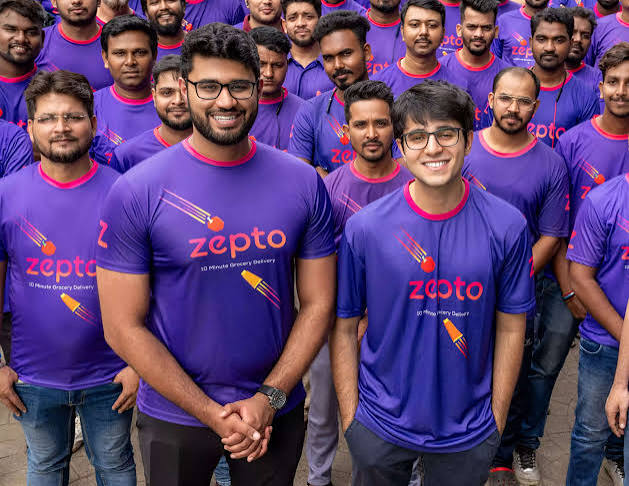
The Aadit Palicha and Kaivalya Vohra Zepto journey has not been without serious turbulence. The 2022 to 2023 global funding winter hit hard. The collapse of Silicon Valley Bank froze operational funds at a critical moment. Early hiring mistakes compounded the pressure, and the founders had to rebuild their team selectively, prioritising execution quality over headcount growth. Zepto Café had to pause operations in 44 cities due to staffing challenges before stabilising. The brand has also faced criticism since 2024 for differential pricing and hidden charges appearing at checkout, a real reputational concern for a consumer brand built on trust.
Competition is equally unrelenting. Blinkit, Swiggy Instamart, BigBasket, Flipkart Minutes and Amazon Fresh are all competing for the same customers, the same pin codes and the same delivery windows. Blinkit has dark stores in over 204 cities compared to Zepto’s more concentrated metro presence, which remains one of the key strategic gaps Aadit Palicha and Kaivalya Vohra Zepto is actively working to close.
Net Worth, Recognition and What Comes Next
As of 2025, Aadit Palicha’s net worth is estimated at approximately 4,300 crore, making him one of India’s youngest billionaires. Kaivalya Vohra’s net worth is estimated at between 3,600 and 4,480 crore. Both appeared on the IIFL Wealth Hurun India Rich List, and Kaivalya was recognised as the youngest Indian on that list in 2022 at 19 years old. Both founders have featured on Forbes Asia 30 Under 30 in 2022 and 2023.
The IPO filed in December 2025 targeting a raise of 800 million to one billion dollars with Goldman Sachs, Morgan Stanley and Axis Capital as advisors is the most significant next chapter for Aadit Palicha and Kaivalya Vohra Zepto. Post-IPO, Aadit and Kaivalya are set to become the youngest MD and CEO of a publicly listed company in India. Geographic expansion into smaller cities, scaling dark stores beyond 1,000 locations, growing Zepto Café, building out Zepto Atom and expanding into new verticals are all live priorities.

What This Story of Aadit Palicha and Kaivalya Vohra Zepto Actually Means
The deeper lesson inside the Aadit Palicha and Kaivalya Vohra Zepto story is not about being young or dropping out of Stanford. It is about identifying a problem that was genuinely real, being honest enough to kill what didn’t work, owning the variable that mattered most even when it was expensive and rebuilding whenever something broke rather than defending it. KiranaKart failed. They rebuilt it. Zepto Café stumbled. They stabilised it.
The quick commerce market in India is projected to reach somewhere between 42 and 100 billion dollars by 2030. The competition is fierce and public markets will bring scrutiny that venture rounds never do. But Aadit Palicha and Kaivalya Vohra Zepto has already done the thing that most startups never manage: it changed how millions of people behave in their daily lives. And that, regardless of what the IPO brings, is not a small thing for Aadit Palicha and Kaivalya Vohra Zepto