

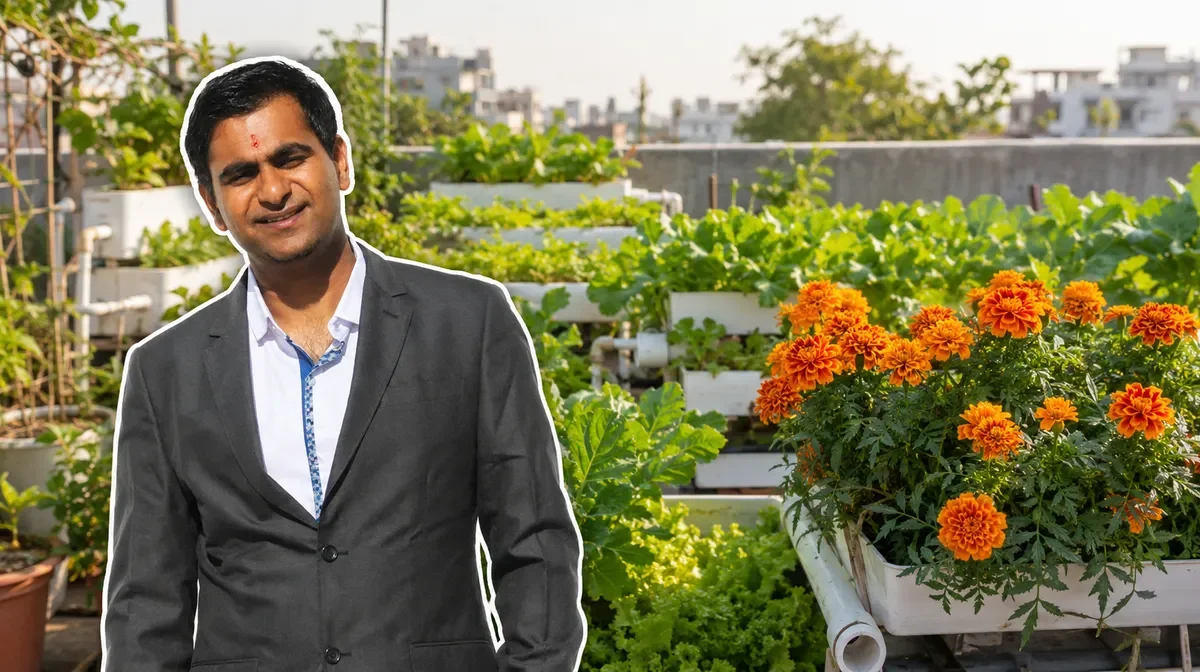
Shashank Dubey Aquaponics Vadodara engineer, quit his corporate job to grow 500 kg of vegetables monthly on a 2000 sq ft terrace farm, now training urban Indians to grow their own food at home.
Shashank Dubey Aquaponics Vadodara; The Article That Changed Everything
Some life-changing decisions begin with a single paragraph. For Shashank Dubey, a 33-year-old electronics and communications engineer who had spent nearly a decade building a comfortable corporate career in Delhi, that paragraph was tucked inside an article about vegetables grown on the floodplain of the Yamuna river. What he read disturbed him deeply. Vegetables grown in polluted, contaminated environments, loaded with heavy metals, quietly making their way onto the plates of millions of unsuspecting urban families. People consuming them, he learned, were putting themselves at real risk of fatal diseases including cancer.
That single moment of awareness was the beginning of the Shashank Dubey Aquaponics Vadodara story, one that would eventually take him from a desk in Delhi to a 2,000 square foot commercial terrace farm in Gujarat, producing 500 kilograms of fresh vegetables every single month. But before any of that could happen, he had to be willing to walk away from everything he had already built.
Leaving Comfort Behind
In 2018, after years of stable employment and a predictable professional life, Shashank made a decision that most people around him likely found difficult to understand. He quit his corporate job, left Delhi and moved to Vadodara. The motivation wasn’t a better salary or a more prestigious opportunity. It was vegetables. More specifically, it was the conviction that urban Indians deserved access to food that was genuinely clean, genuinely nutritious and genuinely their own.
Like most urban residents, he immediately ran into the most obvious obstacle: space. Traditional farming requires land, and land in Indian cities is neither cheap nor plentiful. Rather than letting that constraint shut down the idea before it had properly started, Shashank began researching alternative methods of food production, and it was through that research that he first encountered aquaponics, a farming method that would eventually define everything the Shashank Dubey Aquaponics Vadodara journey became.
Understanding Aquaponics: Nature’s Own System
To understand why Shashank became so committed to aquaponics specifically, it helps to understand what makes it different from other soil-free farming methods. He had also looked closely at hydroponics during his research, a method in which plants are grown without soil, with their roots immersed directly in water that cycles continuously through the system, supplemented by liquid chemical fertilisers to provide nutrients.
Aquaponics takes that foundation and adds something remarkable: fish. In an aquaponics setup, a fish tank is integrated into the system so that fish excreta is broken down by bacteria into nitrates, which then become a natural, organic fertiliser for the plants. The water circulates from the fish tank through the plant containers and back again, creating a closed-loop system that imitates river ecology in miniature. Plants feed on what the fish produce. Fish thrive in the water that the plants help keep clean. The two support each other in a cycle that requires no chemical inputs and almost no wasted water.
“It is like imitating the river ecology,” Shashank explained. For the Shashank Dubey Aquaponics Vadodara farm, this meant using upcycled drums and cans as fish tanks, supplemented with iron nails, lime and eggshells to boost iron and calcium levels in the growing medium. The biggest advantage, he points out, is that the entire system is organic by nature, plants don’t need to be individually fertilised, and the method saves approximately 80 percent of the water that conventional farming would require for the same output.
From Six Months of Research to a Thriving Farm
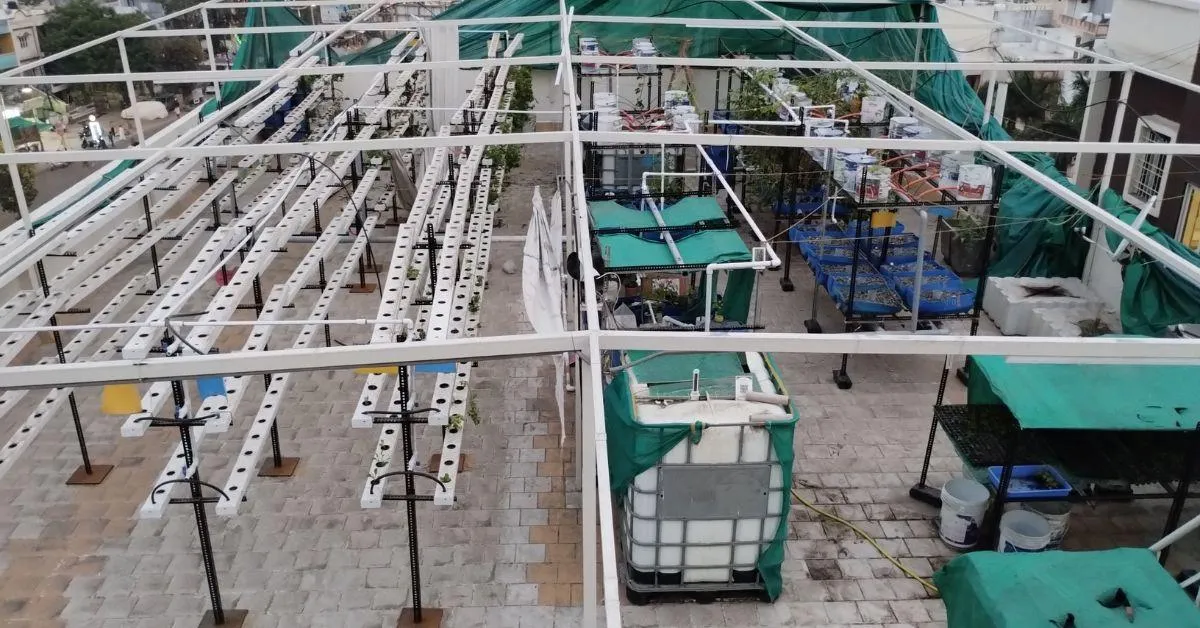
Shashank didn’t leap straight from his resignation letter to a rooftop full of vegetables. He spent six months researching the method thoroughly, receiving assistance from ICAR-CAFRI in Vadodara during that foundational period. He then grew vegetables under artificial light in a 600 square foot indoor setup for three years, building his understanding of the system, testing different plant varieties and refining his approach before eventually scaling up to the commercial terrace farm that now defines the Shashank Dubey Aquaponics Vadodara operation.
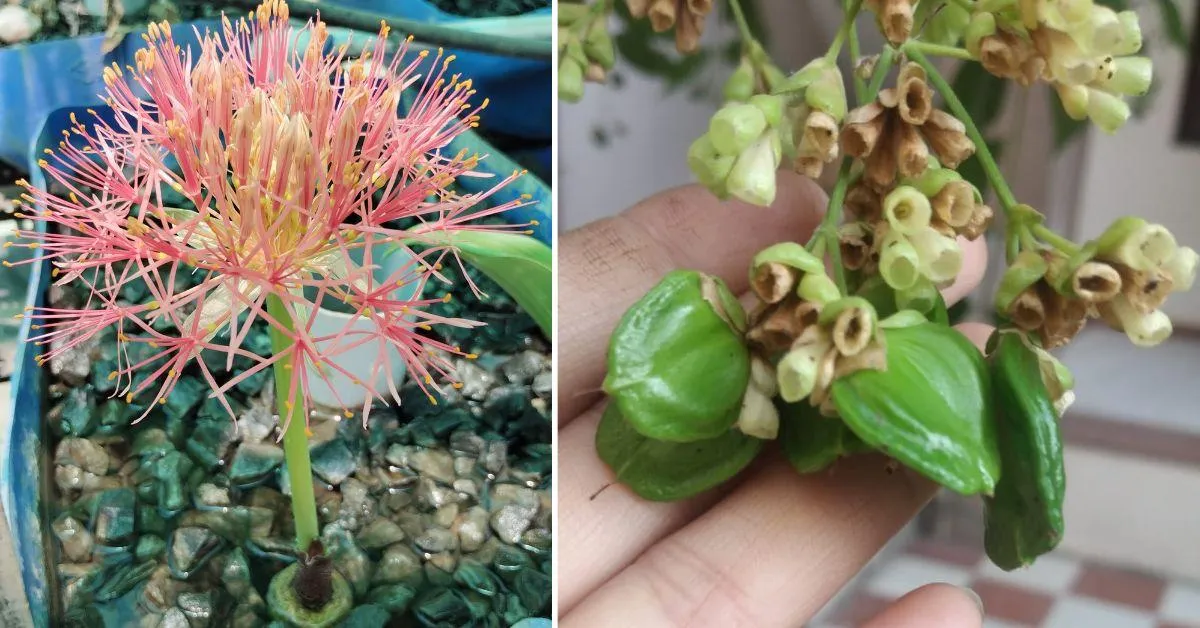
Today, that terrace farm spans 2,000 square feet and produces close to 500 kilograms of vegetables every month, with no previous farming experience to draw from when he started. The range of what he grows is equally impressive: nearly 2,500 varieties of plants, spanning green leafy vegetables, medicinal herbs and flowers, all thriving in a system that most people walking past the building below would never imagine was running on the rooftop above them.
Teaching Others to Grow Their Own Food
One of the most meaningful dimensions of the Shashank Dubey Aquaponics Vadodara story is what happens beyond his own farm. From the very beginning, his vision was never just about feeding himself or even running a profitable produce business. It was about demonstrating to urban Indians that they too could grow their own vegetables, even in tiny spaces, even without any farming background, even in the middle of a city.
To make that vision real, he began offering training to urban residents interested in setting up their own aquaponics systems. The training is structured as a six-hour session, with the first three hours covering the range of plants suitable for aquaponic farming and the second three hours focused on practical implementation. He charges Rs 2,500 for offline sessions and Rs 3,000 for online classes. So far, he has trained 35 people across Gujarat and Rajasthan, supporting each student for a full year after their initial training to ensure they build genuine confidence in managing their own systems.
One of those students, Gautam Trivedi, a 26-year-old music producer from Vadodara, set up an aquaponics farm in just 50 square feet of his garden after training with Shashank. “In an aquaponics setup, we get nice green leafy vegetables that are crunchier and better in taste than what’s available in the market. It also requires low maintenance,” he shared. His experience is a small but telling example of what the broader Shashank Dubey Aquaponics Vadodara mission looks like when it reaches individual households.
The Practical Details Behind the System
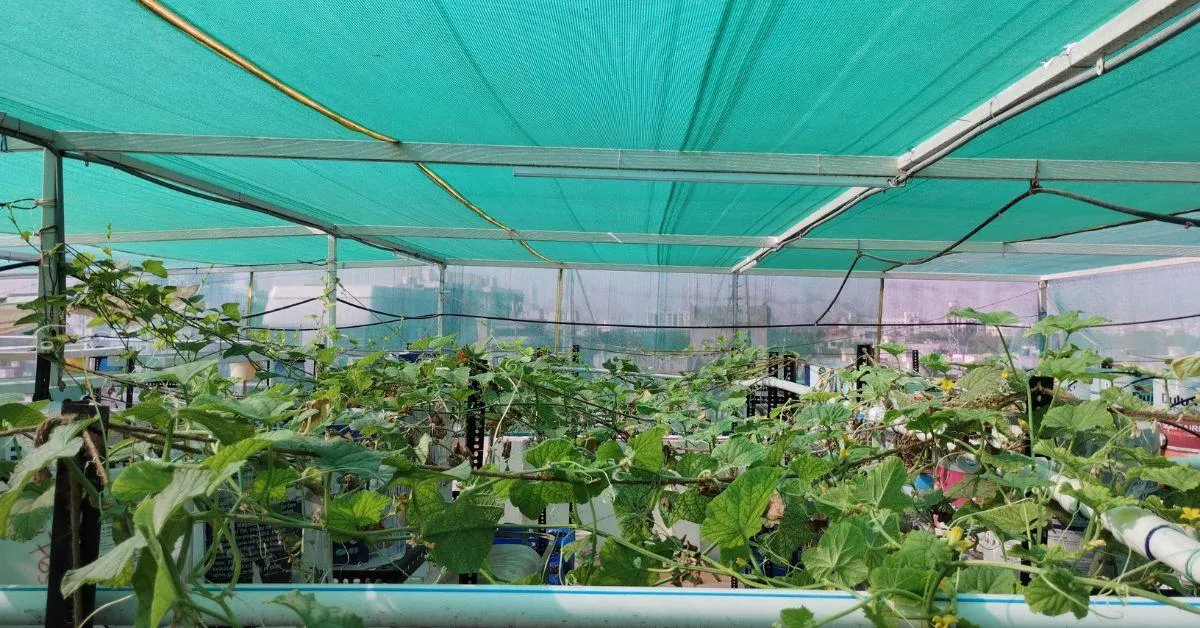
For anyone curious about what it actually takes to set up an aquaponics farm of their own, Shashank is refreshingly specific. Temperature management is critical: leafy vegetables thrive between 25 and 30 degrees Celsius, strawberries and other hilly crops need temperatures brought down to around 18 degrees, and lettuce requires as low as 15 degrees. Urban clay pots are used within the Shashank Dubey Aquaponics Vadodara system to help regulate water temperature naturally.
On the question of fish selection, he recommends gold and koi fish for non-edible setups, since they produce more excreta and handle temperature fluctuations well. For edible fish farming alongside vegetables, a larger tank of at least 3,000 litres is needed to accommodate the fish as they grow. As for cost, establishing a vertical aquaponics terrace farm runs at approximately Rs 800 per square foot, a figure that drops to Rs 400 if vertical farming is not a priority. He emphasises that this is a one-time investment, not an ongoing expense, which changes the financial calculation considerably for anyone seriously weighing the option.
A Mission Rooted in Something Bigger; Shashank Dubey Aquaponics Vadodara
What makes the Shashank Dubey Aquaponics Vadodara story so resonant is the clarity of the purpose behind it. This was never about building a business for its own sake. It was about decentralising food production in a country where urban residents have become almost entirely dependent on supply chains they have no visibility into, and on packaged and processed foods whose long-term health consequences are increasingly hard to ignore.
“Instead of earning a good income for myself, my focus is on enabling urban Indians to grow their own vegetables even if they have a small space, as small as one square foot,” he said. That philosophy- the willingness to measure success by how many other people’s plates improve rather than how much his own bank account grows- is what sets the Shashank Dubey Aquaponics Vadodara journey apart from simply being an interesting farming experiment.
It is a quiet but genuinely radical act, Shashank Dubey Aquaponics Vadodara: an engineer who looked at what was on India’s dinner tables, decided it wasn’t good enough, and then spent years building the knowledge, the infrastructure, and the community to help change it, one rooftop at a time.
Also Read; Daera Cancelled Plans Furniture: How 3 Friends Turned 500 kg of Waste Into Stunning Home Decor