
IIT Guwahati Wastewater Innovation uses sulphate-reducing bacteria to remove toxic lead from industrial wastewater without harsh chemicals, offering a cleaner and safer solution for India’s battery recycling industry.
IIT Guwahati Wastewater Innovation: A Crisis Hidden in Plain Sight
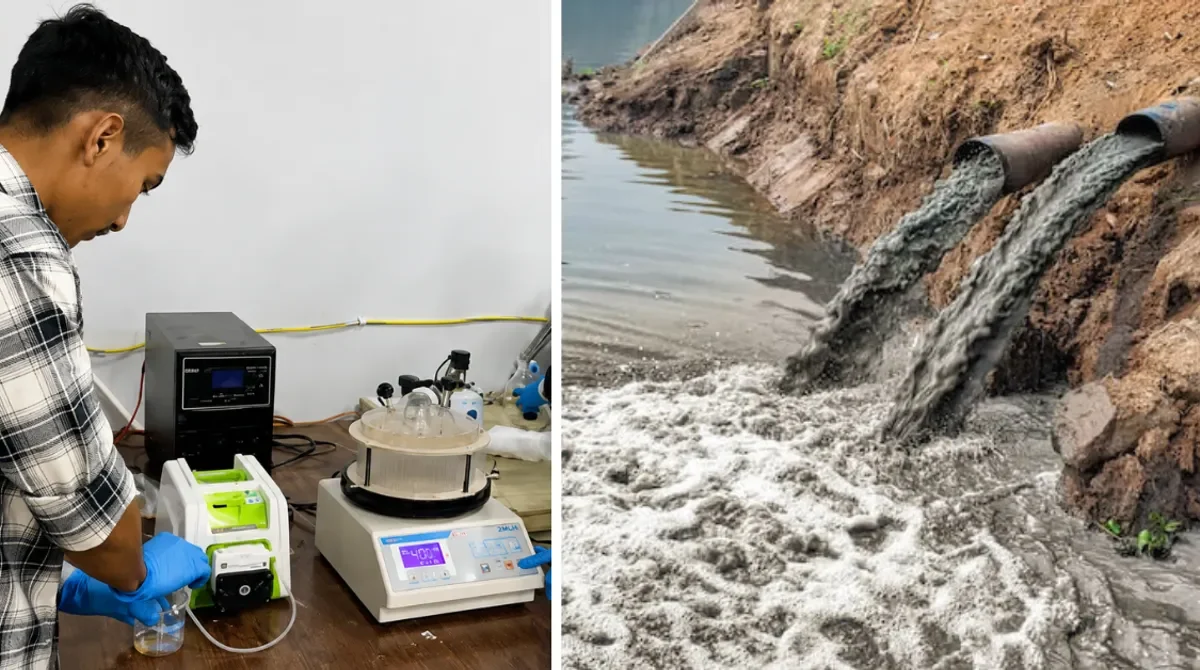
India has a lead pollution problem that most people never hear about. According to a 2020 report by UNICEF and Pure Earth, over 275 million children in India have elevated blood lead levels, accounting for nearly half the country’s child population. One of the most significant sources of this contamination is wastewater discharged from battery recycling units, which carries high concentrations of dissolved lead directly into rivers, soil, and eventually into the bodies of children living nearby.
It is a public health crisis that has persisted largely because treating this kind of wastewater is genuinely difficult, expensive and comes with its own set of environmental complications. But researchers at the Indian Institute of Technology Guwahati have now developed a biological approach that could change how India handles this problem entirely, and the IIT Guwahati Wastewater Innovation doing it without a single harsh chemical.
The Problem With Conventional Treatment
To understand why the IIT Guwahati Wastewater Innovation matters, it helps to first understand what existing treatment methods look like and where they fall short. Most industrial wastewater treatment plants currently rely on chemical processes to remove lead from contaminated water. These processes take considerable time, consume significant resources and produce large volumes of lead-filled sludge as a byproduct.
That sludge then has to be carefully and safely disposed of, which is where a second problem begins. When lead-containing sludge ends up in landfills, the lead within it can slowly leach back into surrounding soil and groundwater over time, essentially creating a new contamination problem in the process of trying to solve the original one. It is a cycle that conventional treatment has never fully resolved, and it is precisely the cycle that the IIT Guwahati Wastewater Innovation was designed to break.
Bacteria as the Solution
The research behind the IIT Guwahati Wastewater Innovation was carried out by Professor Pranab Kumar Ghosh of the Department of Civil Engineering alongside research scholar Sreekanth Yadav Golla, with findings published in the Journal of Environmental Chemical Engineering. Their approach centers on sulphate-reducing bacteria, a type of naturally occurring microorganism that thrives in oxygen-free environments and has a remarkable ability to transform dissolved lead into something far more manageable.
Here is how the IIT Guwahati Wastewater Innovation works in practice. These bacteria convert sulphate present in the wastewater into sulphide. That sulphide then reacts with the dissolved lead in the water to form lead sulphide, a stable solid mineral that can be physically separated and removed from the water far more easily than dissolved lead ever could be. As an additional benefit, the process also reduces the acidity of the wastewater itself, creating better conditions for the bacteria to continue surviving and working, which improves the overall efficiency of treatment over time.
Training Bacteria to Survive the Unsurvivable
The concept is elegant, but putting it into practice was far from straightforward. The biggest challenge the IIT Guwahati Wastewater Innovation team faced was keeping the bacteria alive long enough to do their job. Wastewater from battery recycling units is extremely hostile to most living organisms. It is highly acidic and loaded with heavy metals, conditions that would kill most microorganisms before they could contribute anything useful.
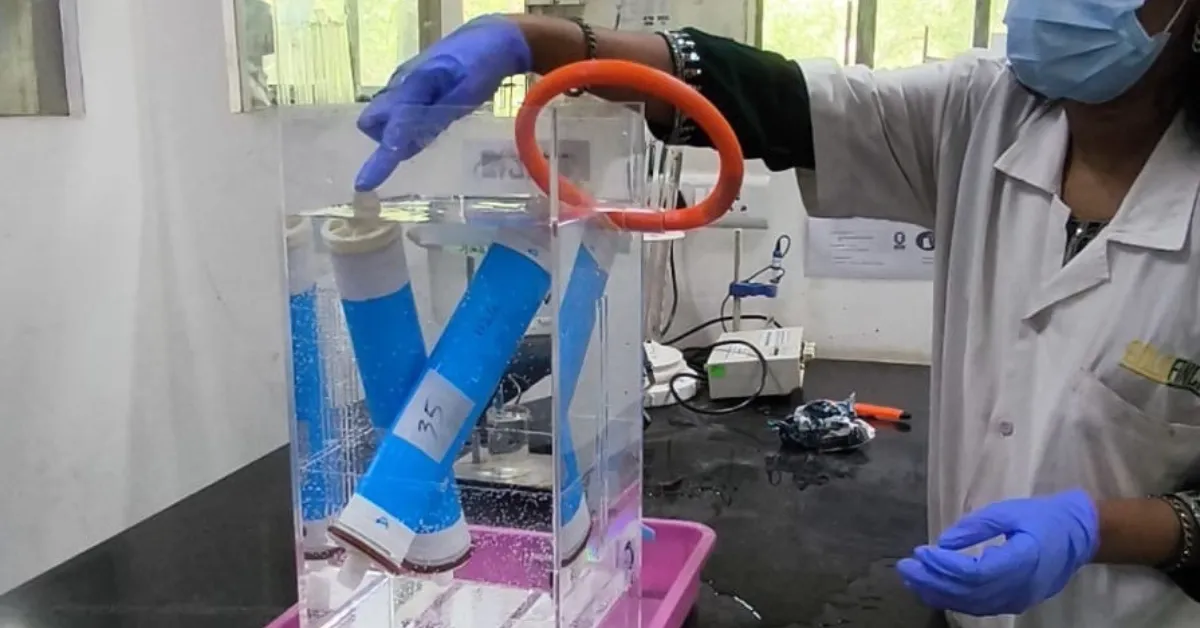
To overcome this, the research team developed a carefully structured acclimatisation process, essentially training the bacteria step by step to tolerate increasingly extreme conditions until they could not only survive but actively function in the very wastewater they were meant to clean. This gradual conditioning process was one of the most technically demanding aspects of the entire IIT Guwahati Wastewater Innovation, and its success was what made everything else possible.
The biological reactor they built around this trained bacterial culture successfully removed lead from wastewater and converted it into stable lead sulphide while producing significantly less lead-containing sludge than conventional chemical treatment methods generate. That reduction in sludge volume alone represents a meaningful step forward for industries that have long struggled with safe disposal.
Is the Leftover Sludge Safe
Even with less sludge being produced, the IIT Guwahati Wastewater Innovation team knew they needed to verify that whatever sludge remained was genuinely safe to handle and dispose of. Golla explained that they examined the bio-sludge carefully to determine its environmental safety and found that the vast majority of lead present in it existed in stable chemical forms that do not easily migrate or dissolve into surrounding environments.
Leaching tests confirmed that only very small amounts of lead were released from the sludge under testing conditions, with concentrations remaining well below regulatory limits. This is a critical finding for the IIT Guwahati Wastewater Innovation because it means the treated waste carries far less risk of re-contaminating soil or groundwater than the sludge produced by conventional chemical treatment processes. The problem is not just being shifted from one place to another. It is being genuinely contained.
Where This Technology Could Go Next
The researchers see the potential of the IIT Guwahati Wastewater Innovation extending well beyond battery recycling. The same biological process could be applied to wastewater treatment across mining, smelting and metallurgical industries, all sectors that routinely generate heavy metal contaminated effluents and have long needed cleaner, more sustainable treatment alternatives.
Future research will focus on making the process more economically viable at scale, reducing residual sulphide levels in treated water and exploring whether valuable metals could potentially be recovered from the process rather than simply being disposed of. If those goals are achieved and the IIT Guwahati Wastewater Innovation can be successfully scaled to industrial level, it could offer India’s most polluting industries a genuinely sustainable alternative to the chemical-heavy treatment methods they currently rely on, one that produces less hazardous waste, costs less to operate over time and addresses a pollutant that has quietly damaged the health of millions of Indian children for far too long.
The science behind the IIT Guwahati Wastewater Innovation is still moving toward wider application, but what has already been demonstrated in the laboratory is significant enough to be taken seriously. Sometimes the most powerful solutions to the most deeply entrenched problems come not from adding something new and artificial to the equation, but from working with what nature has quietly been doing for millions of years, and simply learning how to direct it more precisely toward the problems we most need to solve.